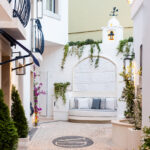
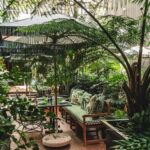

There are hotels that erase their past, and there are those that wear it like a second skin. The DoubleTree by Hilton Lisbon – Fontana Park belongs unequivocally to the latter. Occupying what was once the Metalúrgica Lisbonense, an iron factory dating to 1908, the building does not simply acknowledge its industrial origins, and instead insists upon them.
The Art of Interior Tension
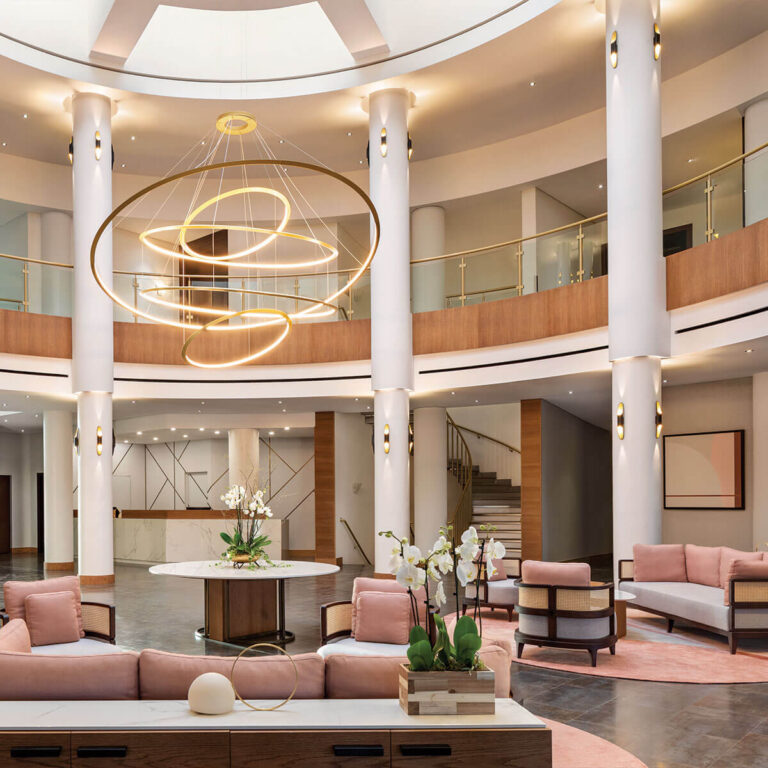
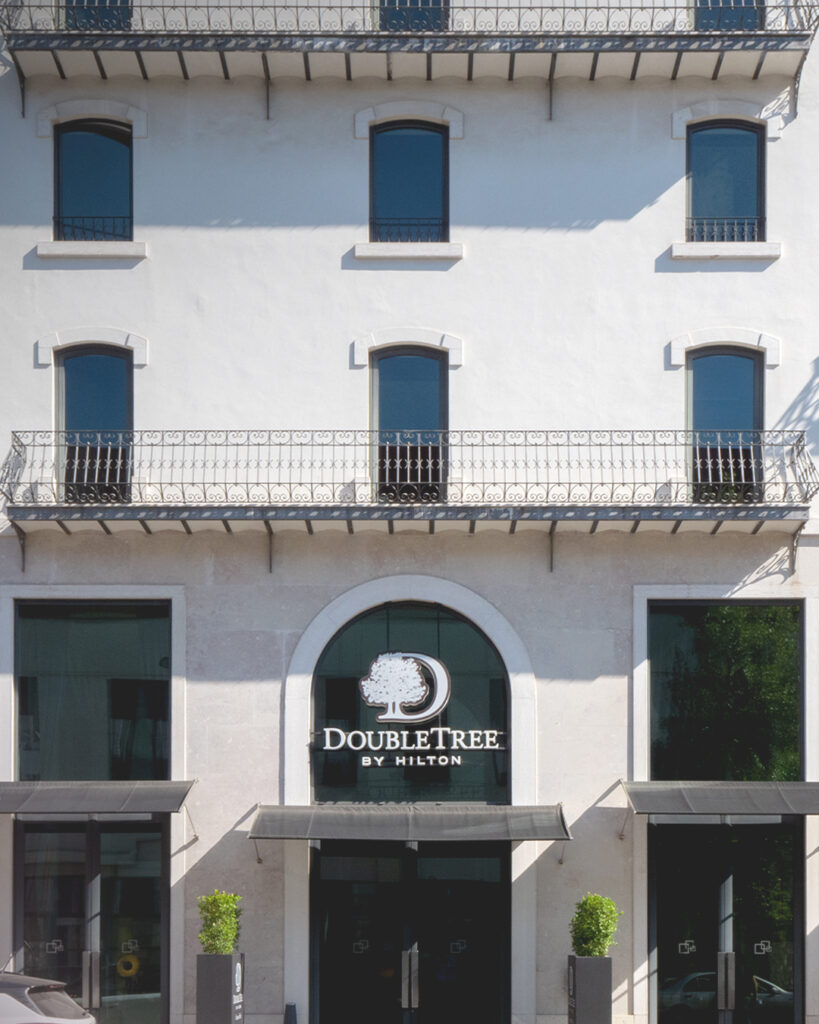
The facade alone tells the story: a plain beige exterior punctuated by tall lower-story windows and curving wrought-iron balconies, the kind of architectural restraint that signals confidence rather than neglect. Step inside, and the original ironwork greets you in the lobby, a quiet reminder of what the building once was.
It was Nini Andrade Silva, one of Portugal’s most internationally celebrated interior designers (whose work has graced the pages of Wallpaper, Condé Nast Traveller, and Architectural Digest) who was tasked with translating this industrial memory into something liveable. Her answer was disarmingly elegant: nature. Specifically, a park.
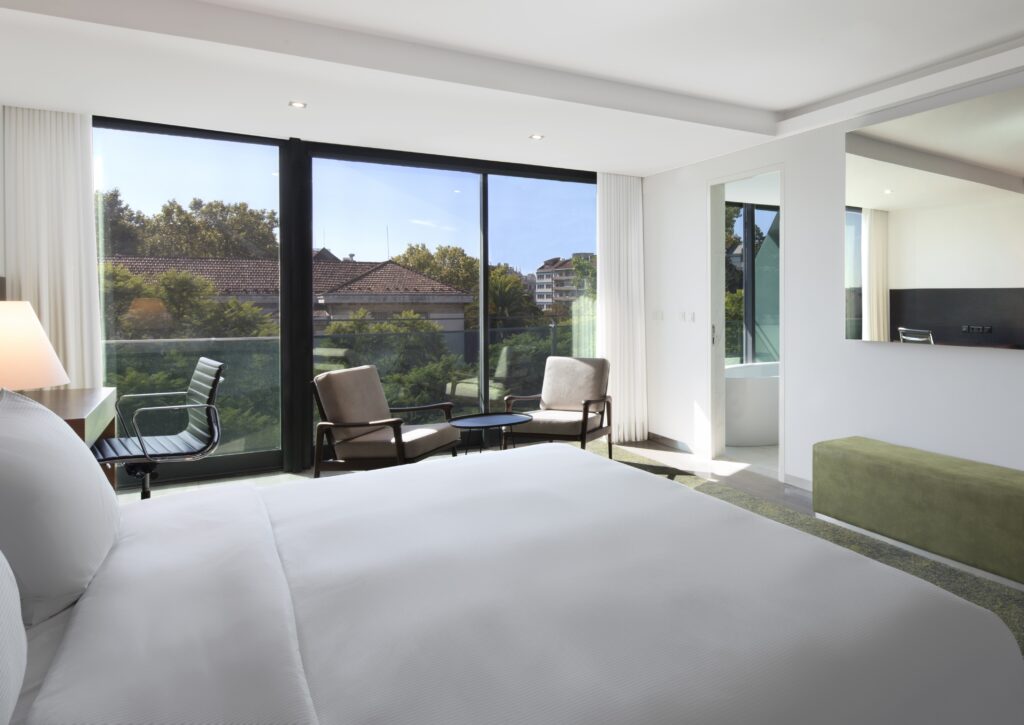
Black, white, and green: the palette of a building that never forgot it was once a factory. Every surface, every corridor, every room committed to those three colours with an almost obsessive precision. Raw and deliberate. Guest rooms open onto floor-to-ceiling windows framing the Jardim Fontana below, the city’s greenery held just beyond the glass.
The project earned Andrade Silva the distinction of Best Interior Design of Europe at the European & Africa Property Awards, recognition that feels entirely deserved.
The Counterpoint
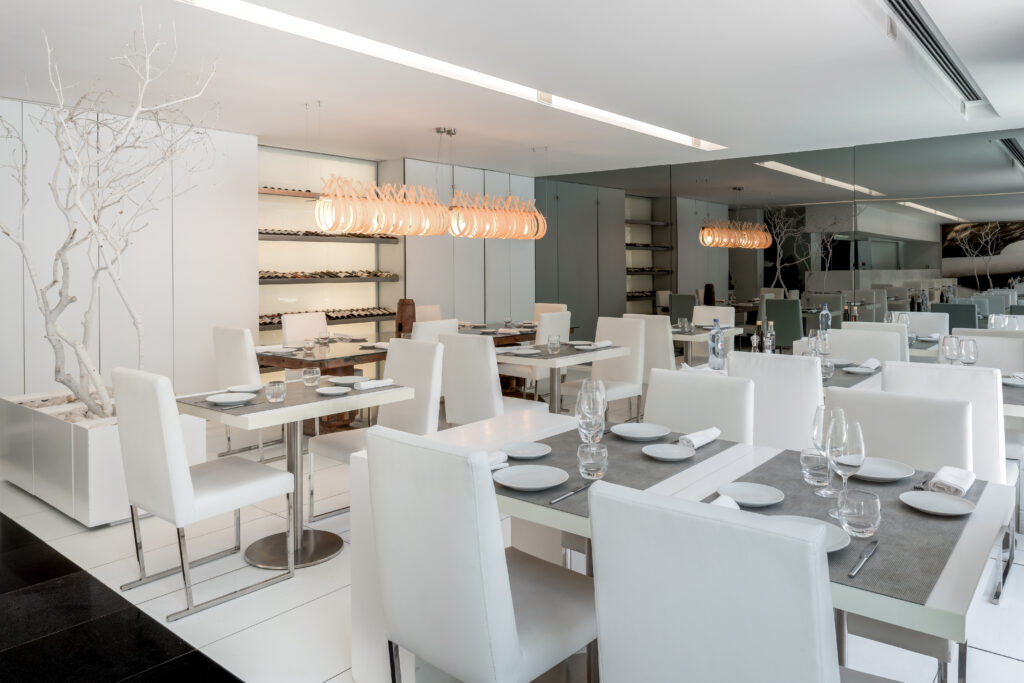
And then there is Saldanha Mar. If the hotel is shadow and steel and the quiet drama of a reimagined factory, the restaurant is its precise and luminous opposite: entirely white, flooded with natural light, its minimalist interiors softened by the presence of stone and organic branches that lend the space an almost meditative quality. To move from the hotel lobby into Saldanha Mar is to understand what the word contrast can mean when wielded with intention.
The kitchen, too, operates from a different set of convictions, ones rooted not in industrial history but in the sea. Each morning, the chefs make their way to the Mercado 31 de Janeiro, directly opposite the hotel, where the day’s fish is chosen fresh from the counter: robalo, garoupa, linguado, cherne. What arrives at the table is grilled over 100% organic charcoal, a detail described as singular within Lisbon’s restaurant landscape.
A Portrait of Lisbon
What makes the Fontana Park remarkable is not any one of these elements in isolation, but the way they hold together: the industrial and the maritime, the graphic and the luminous, the European design award and the daily market run. It is, in the end, less a hotel than a portrait of Lisbon itself: a city that has always known how to carry its contradictions with extraordinary grace.