The Architecture Behind Ricardo Vila Nova’s Hair Clinic
Ricardo Vila Nova named his clinics after two phone codes. Twenty-one for Lisbon. Twenty-two for Porto, where he is from. The two numbers together, 2122, carried the outline of a career: where he started, where he arrived. Then he found a building on Avenida da Liberdade with 212 on the second floor. The landlord spent months deciding whether to let him in, and Vila Nova spent those same months refusing to walk away.
“Even though I was about to give up,” he says, “this has to be my address.” He has always paid attention to these things. The number existed before the clinic, before the name, before any of it. All he had to do was get through the door.
A Building That Cannot Be Touched
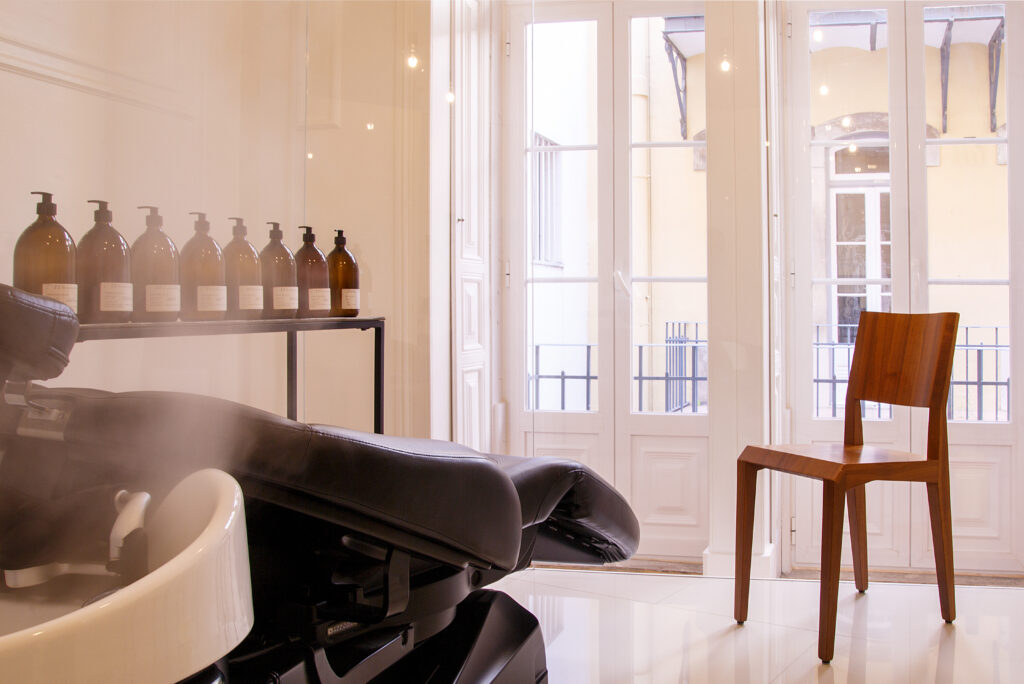
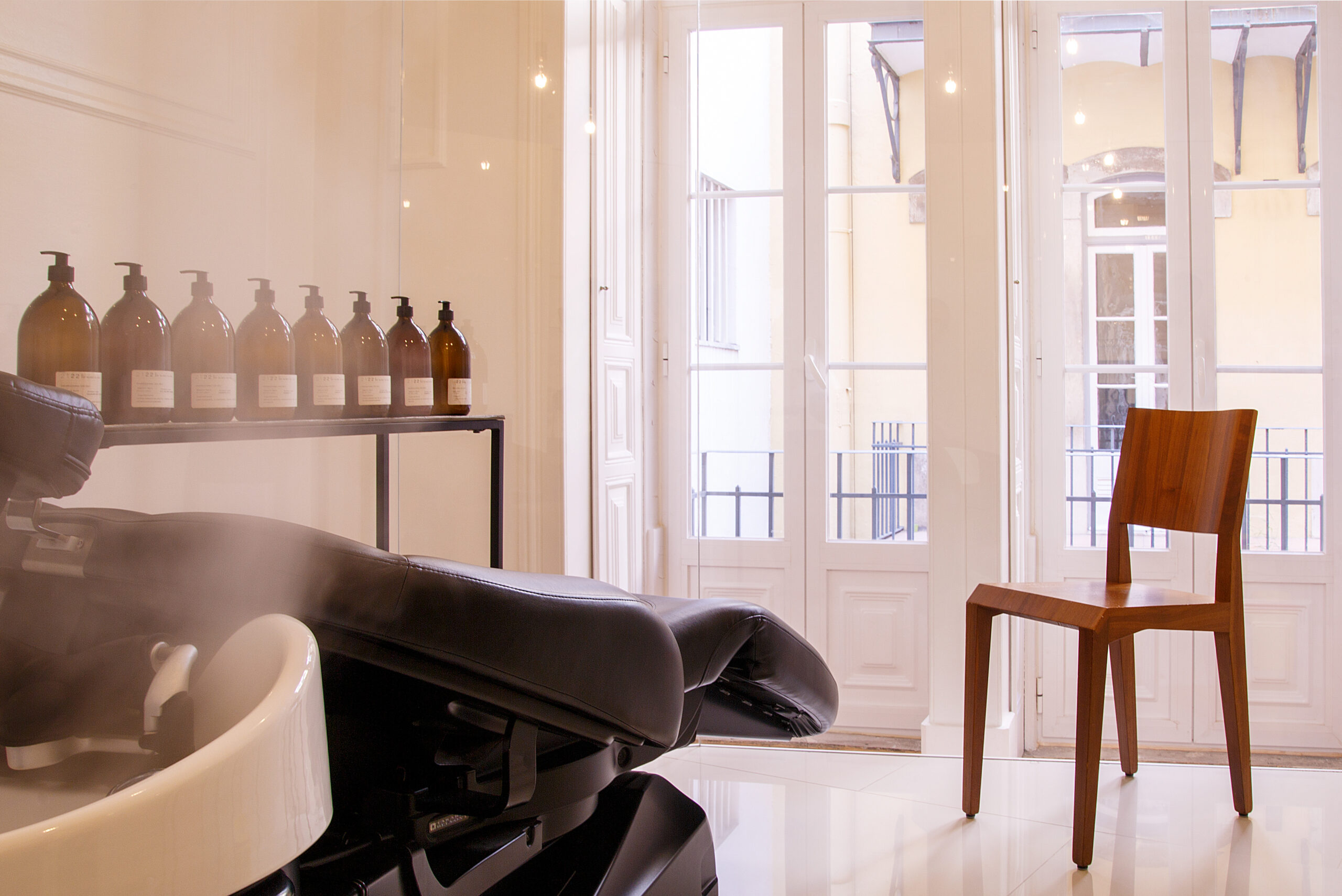
Heritage law governs every surface of the clinic at 212.2. The plasterwork, the mouldings, the walls themselves are protected. Nothing structural can be altered. Not a nail can be driven. For most, this would be a limitation. For Vila Nova, it became a challenge.
“I would have been stupid to change it anyway,” he says. “The beauty of the building, the details, they’re phenomenal.” Every element of the interior was designed to rise from the floor. Mirrors lean against walls. Furniture touches surfaces without penetrating them. The architecture, entirely preserved, does most of the work.
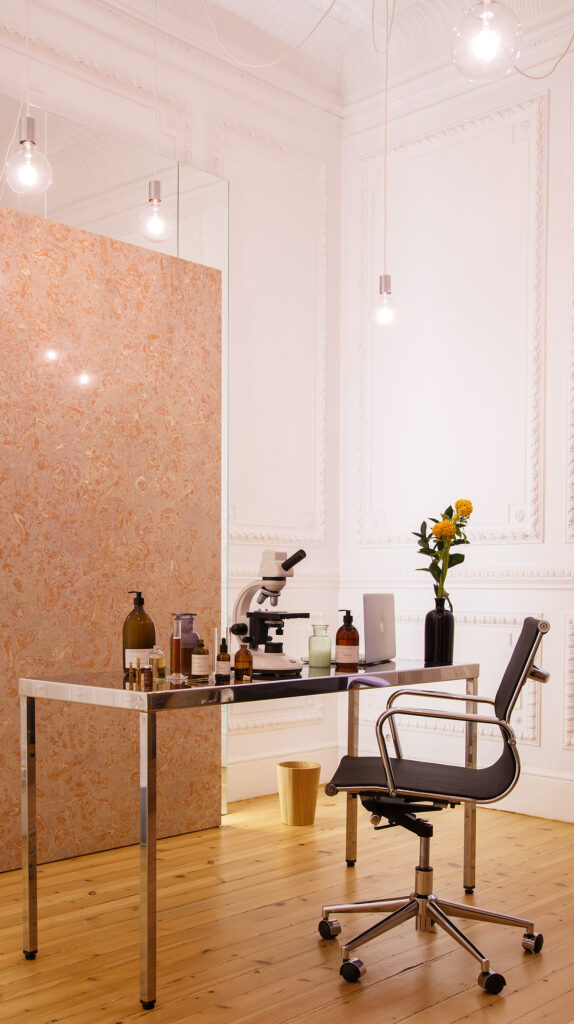
The Lioz stone used throughout, a local limestone that appears across Lisbon’s architectural history, was chosen as much for what it means as for how it looks. Each clinic in the network carries a version of the same gesture: in London, a pink onyx cube. In Bahrain, a pale white onyx sourced from Portuguese quarries and shipped to the Gulf. In Lisbon, the same object in a different material, carrying different light.
“There has to be that stone,” he says. “There is no other way.”
Porto to London to Harrods

Vila Nova left Porto at sixteen, invited by L’Oréal’s laboratories in Paris to pursue his studies there. He returned to Portugal briefly before moving to London, where he trained in Aesthetic Dermatology.
It was in London that he joined a group of clinics, initially focusing on facial treatments. Over time he gravitated toward hair, drawn by the observation that the machines treating scalp inflammation and the machines treating skin inflammation were, in many cases, the same machines. That specialisation proved fruitful.
When the group was acquired by an American company and asked him to standardise or stop, he stopped and went to Harrods instead.
Harrods had been acquired by the Qatari royal family, who believed the future of retail was services. As part of that shift, they began bringing in specialists. Vila Nova was invited to lead the hair offer, performing injectables for the scalp at a time when Botox itself was still considered radical. He was one of several experts recruited as the department took shape.
“I was probably one of the first to put medical services into a luxury store,” he says. “I broke the barrier.”
The Accessory That Finishes Everything
Vila Nova has a theory about hair, which he states plainly.
“Comparing hair with architecture: if you don’t have a good structure, the architecture collapses.”
Hair, in his view, is the body’s most underestimated element. People invest in procedures, in clothes, in the careful maintenance of appearance. The head, he argues, is what finishes the sentence that everything else begins.
The comparison to architecture is not decorative. It is, for him, technical. To change how hair looks on the outside, you have to understand what is happening inside the root: genetics, diet, environment, the mineral content of the local water. A client who spends half the year in Geneva and half in Dubai receives two different protocols, because the body behaves differently in each place.
“We’re the only ones who can go up to the craziest detail,” he says, “and prepare something that is unique to you.”
The treatments at 212.2 use plasma, exosomes, and growth factors, technologies now common in aesthetic medicine. The distinction, Vila Nova is precise about this, is in the measurement. Each protocol is derived from an individual analysis: blood chemistry, scalp pH, lipid film. The approach mirrors what high-end skincare brands have been developing for years, applied to the scalp.
The culture, he says, is finally arriving. Ten years ago, what he was doing was unknown, even questionable. Now clients come in having already researched the terminology.


The New Plastic Surgery
There is a cultural shift Vila Nova has been watching for years, and it is now, he says, undeniable.
Men are getting hair transplants the way women once approached cosmetic surgery, not reluctantly, not in secret, but openly, enthusiastically, sometimes within weeks of a breakup. “They go back to the gym, they broke up, and they want to put on hair,” he says. “There’s no more fear, no more barriers, no more secrets.” The head, long the last frontier of male vanity, has become the first thing they address.
For women, the shift is different but parallel. Hair care is starting to be treated the way skincare was treated a decade ago: medically, seriously, with the understanding that what happens on the surface is a consequence of what is happening underneath. Clients arrive having already researched PRP, exosomes, growth factors.
“We need to be able to transport you into a world of fantasy,” he says. “A designer that creates a chair, a person that creates an architectural space, they have a story to tell. We have a story to tell too.”
He means the building as much as the clinic. The plasterwork above him.