The Estate That Time Rebuilt
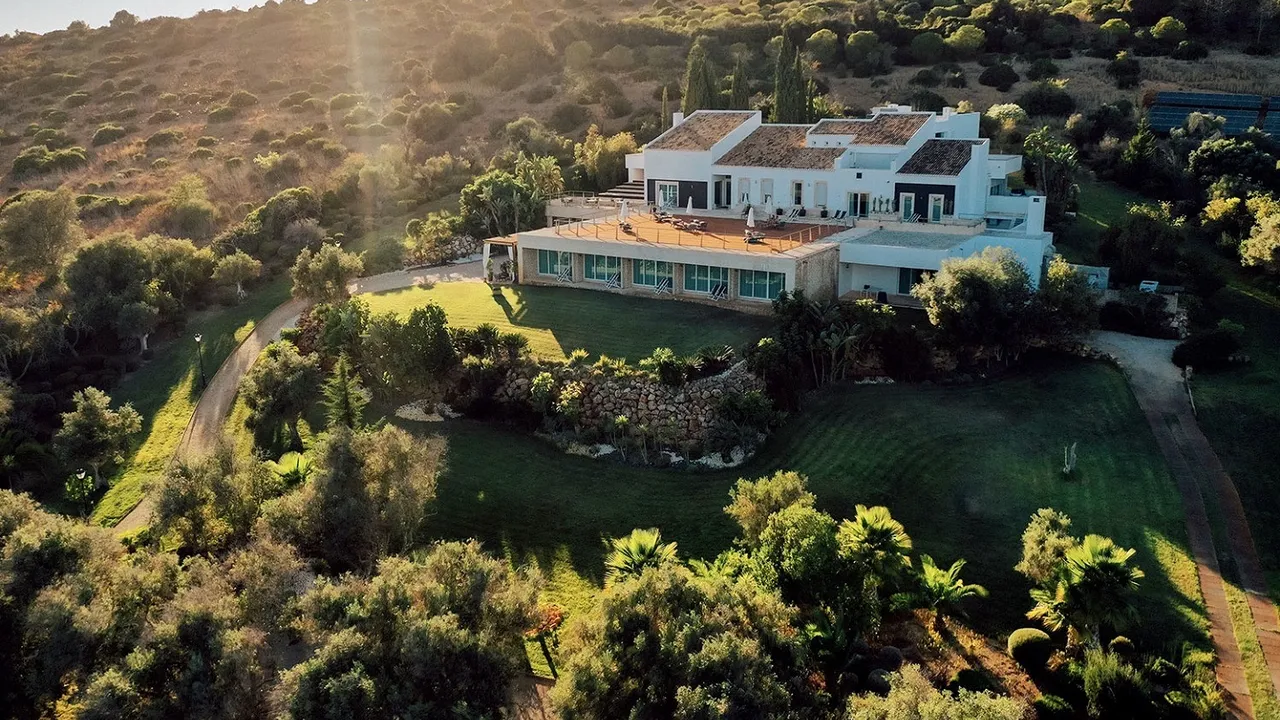
In the western Algarve, a 19th-century manor house has become the region’s only five-star rural retreat, a place where silence is the amenity and the land itself does the talking. The experience begins before the hotel even comes into view. The gate opens, and there is nothing but green. It feels almost ceremonial, that first exhale away from city life. At Vila Valverde Design & Country Hotel, putting guests at ease from the very first moment is not an afterthought.
The estate stretches across five hectares between Lagos and the Atlantic, a setting that earns its keep on both counts: close enough to the sea to walk there, far enough from everything else to feel genuinely removed from it.
The story of Vila Valverde begins not with architects or investors, but with a family that chose to stay. Luis Tavares arrived in the Algarve in 1985 with his German wife, Margit, and built a successful tourism business in the region. After years of sending other people on holiday, the instinct to create something more lasting took hold.
He found it in Praia da Luz, a ruined quinta on five hectares of disused agricultural land, overgrown and forgotten.
The restoration, undertaken in the early 2000s alongside an architect friend, was guided by a principle still visible today: preserve what existed and add only what enhances it. The historic manor house was carefully rebuilt. Modern rooms and suites were integrated without disturbing the estate’s natural topography.
When the hotel opened in 2004, it achieved something rare. It held two timelines at once, the 19th century and the contemporary, without allowing either to overpower the other.
Today, the property remains in the hands of the Tavares family and is run with the same attentiveness that shaped its beginnings.
There are fifteen rooms, each one different, each carrying the settled quality of a space designed to feel right rather than impress. Natural materials, clean lines and wide windows allow the gardens to do much of the work. There is little excess and very little missing.
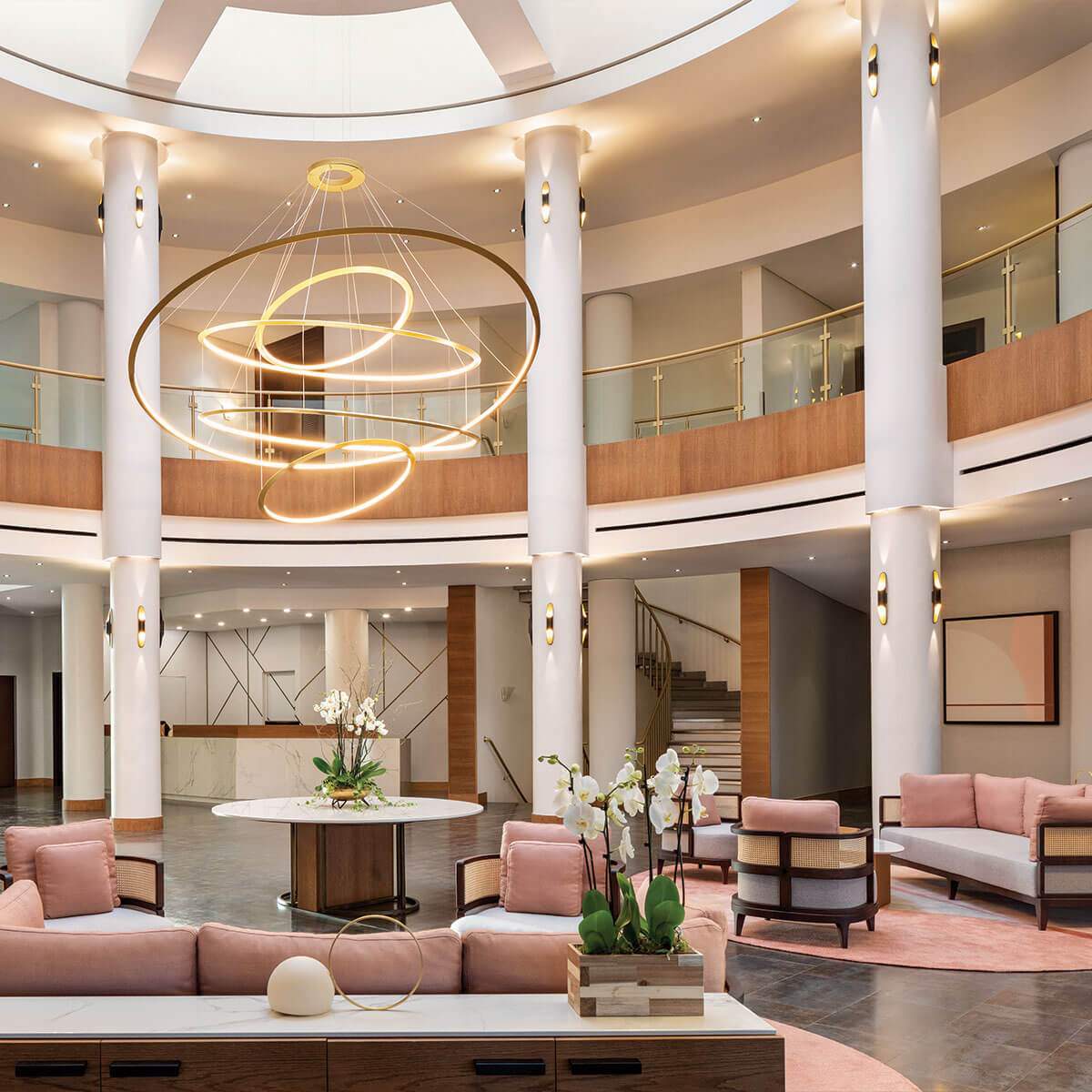
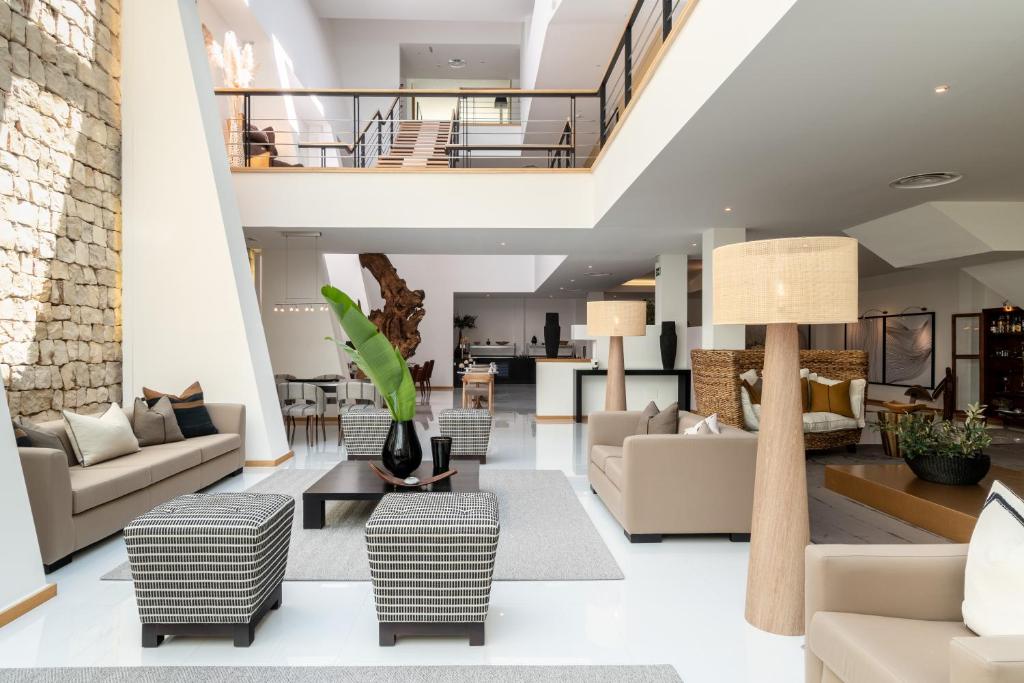
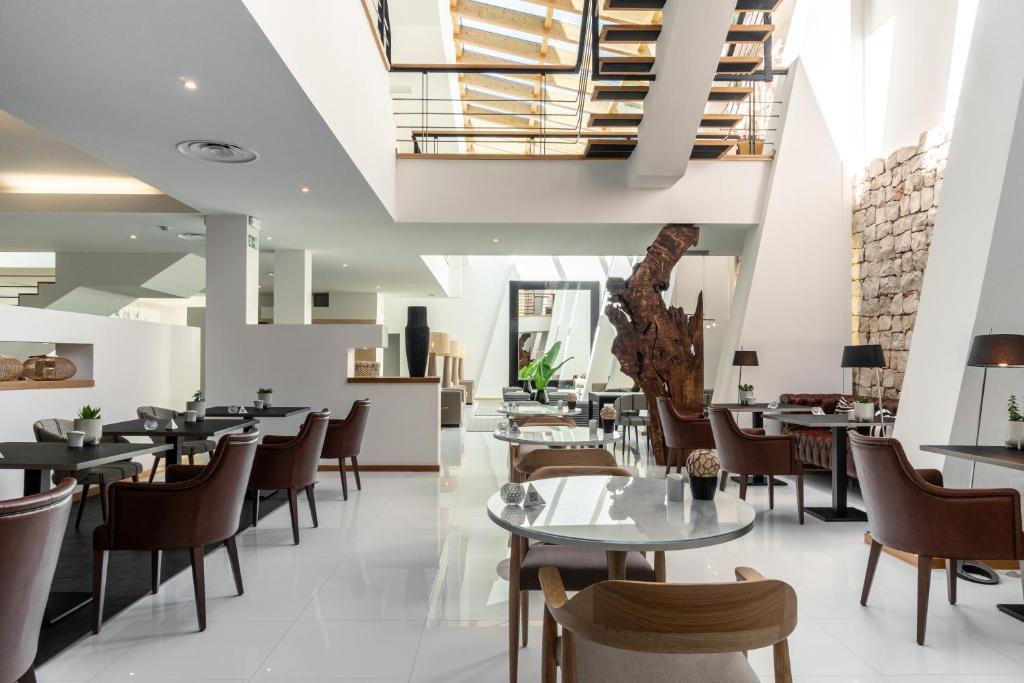
The common spaces follow the same instinct. The living room feels less like a hotel lounge and more like the ground floor of a house where someone with excellent taste actually lives. It is the kind of place that slows you down without asking.
A wine cellar draws evenings a little cooler and a little closer. The panoramic terrace opens towards the horizon with an ease that feels entirely unforced.
What holds it all together is consistency. Nothing feels added for effect. Every room, every corridor and every view seems to belong exactly where it is.
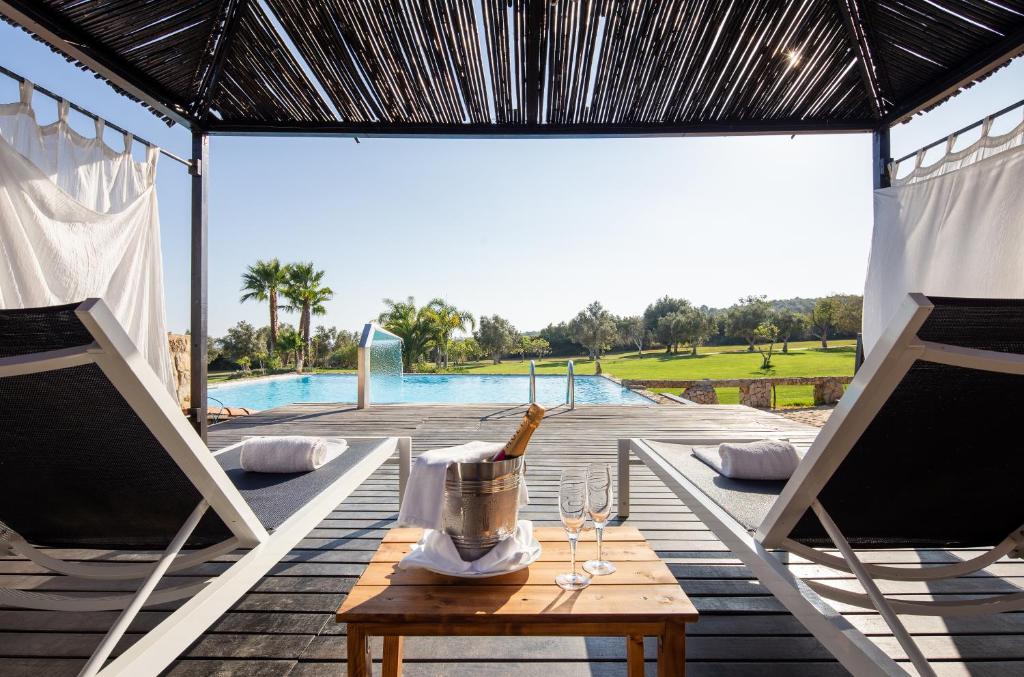
The outdoor pool was once a cistern. It is the kind of detail that stays with you because it explains so much about the place itself.
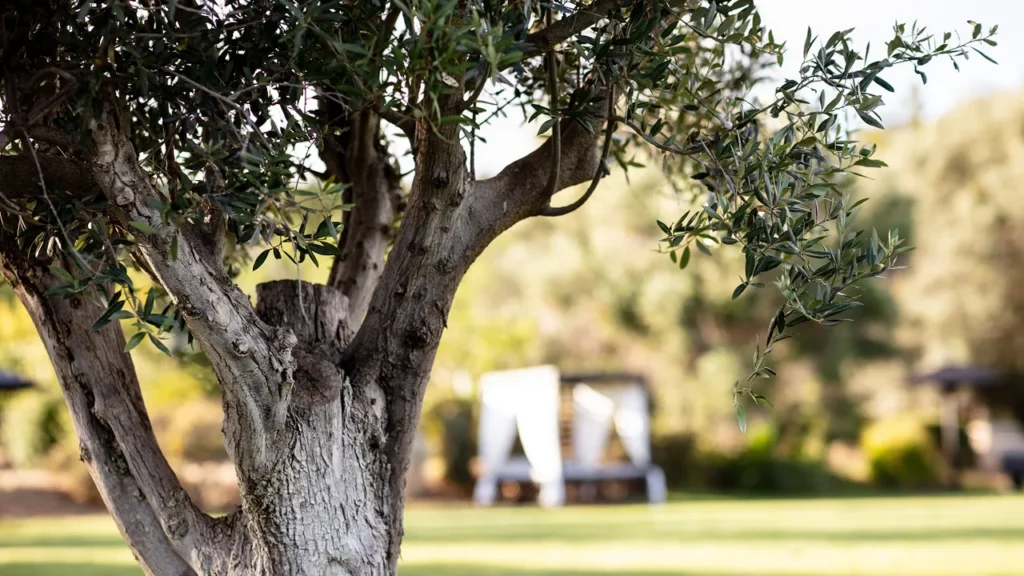
Elsewhere on the estate, a private spring feeds the property, an organic vegetable garden supplies the kitchen, and the orange groves are maintained not for appearance but for use. None of it is labelled or staged. It simply exists, the way things do when care has been part of a place for long enough.
The wellness spaces follow the same register: a heated indoor pool, a sauna and a massage room. The indoor pool, fifteen metres long and five wide, carries the same stillness as the rest of the estate. The kind of stillness that feels built into the walls as much as the water.
That relationship between land and house extends naturally to the kitchen.
Alecrim, the hotel’s restaurant, takes its name from the Portuguese word for rosemary. The menu changes daily, shaped by whatever the garden is producing and interpreted through a modern Portuguese lens.
Breakfast unfolds slowly: regional breads and pastries, mountain honey, house-made jams, local cheeses and seasonal fruit. It is brought to the table. There is no buffet to circle, no sense that the morning is something to move through quickly.
Dinner is more focused, built around a daily menu of refined Portuguese cooking that feels both rooted and precise.
Eating at Alecrim does not feel like eating at a hotel restaurant. It feels like eating somewhere with a clear point of view and access to very good ingredients.
The location is worth stating plainly because it is better than the address suggests. Praia da Luz is a small bay village of unusual calm, far enough from the central Algarve’s resort infrastructure to feel almost separate from it.
Lagos sits ten minutes away, with its historic centre, beaches and fish market all within easy reach.
For those wanting to explore further, the hotel offers car rental and bicycle hire, while the surrounding landscape lends itself to hiking, golf and the slower kind of coastal wandering that the western Algarve does better than almost anywhere else in Portugal.
Some places take a day to understand. Vila Valverde takes about an hour. After that, you stop analysing it and settle into its rhythm.
In a region full of polished resorts and sea-facing villas, what makes this place distinct is not simply beauty but conviction. Fifteen rooms, family-run, fed by its own land and shaped by what was already here.
The kind of place that, once found, tends to become part of a person’s map of return