

In Lapa, five fishermen’s houses from 1878 have been stitched into Villa Dorothéa, a residence of twenty rooms with no lobby, no protocol and a courtyard full of jasmine.
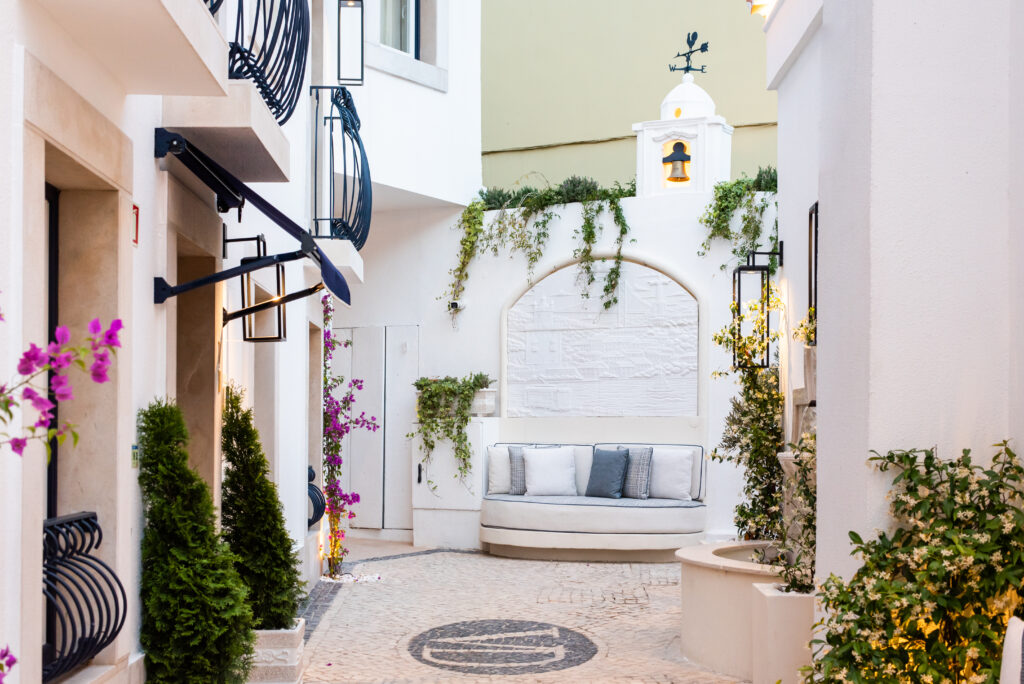
There is a moment, somewhere between the top of Rua das Trinas and the first courtyard, when you realize nobody is going to check you in. No marble console, no discreet cluster of staff and no ceremonial handing over of a key.
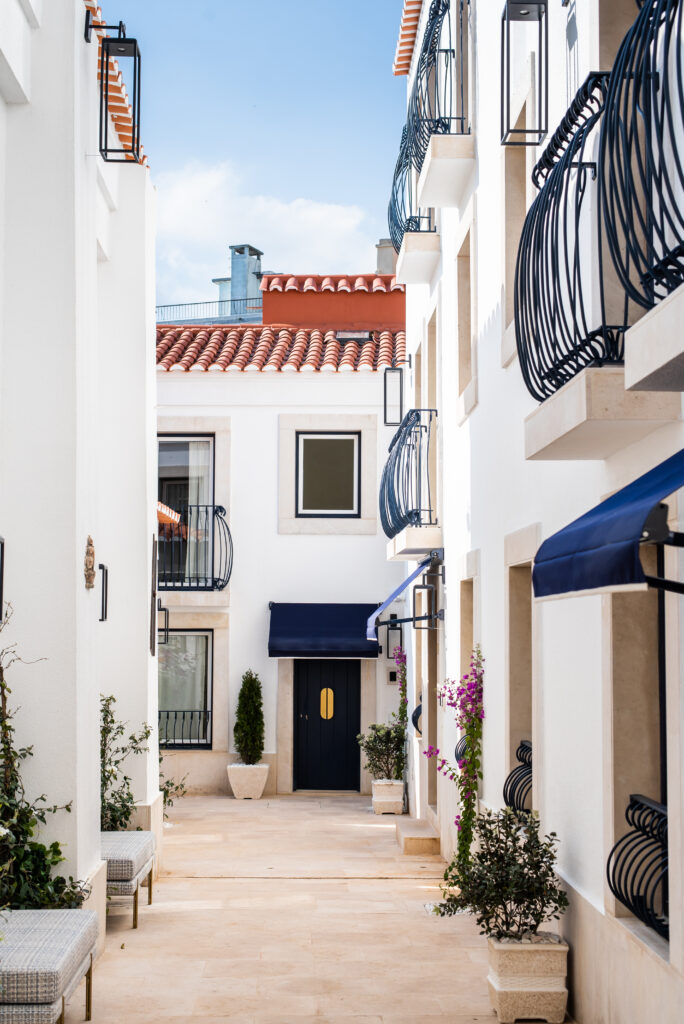
Instead there is a cobbled path of Portuguese stone, a scent of jasmine that arrives before the view does, and a door that looks very much like the door of a house, because it is one.
Villa Dorothéa, which opened in June in Lisbon’s Lapa district, is not a hotel that occupies a building but five of them, a row of nineteenth century houses raised in 1878 for fishermen’s families in one of the city’s oldest quarters, the tight, laundry strung stretch that spills down toward the Tagus between Lapa and Santos.
The most radical decision here is also the least visible.
The developers, the boutique label Tradition Signature, kept the five houses as five houses. They are joined by stone alleys, passages, and small terraced courtyards rather than merged into a single circulation spine, and the pathways crossing the estate remain officially registered in Lisbon’s city cadastre as the semi public ways they always were.
The result is a micro neighbourhood with a gate: you move between your room and breakfast the way you would move between two friends’ front doors, outdoors, under the sky, past bougainvillea, ceramic tributes to the area’s fishing heritage, and historic tiled plaques left exactly where they were found.
That plan does something no amount of specifying can fake. It makes the property feel found rather than composed. Each house keeps its own proportions, its own stair, its own quantity of daylight, and the twenty rooms inside them inherit those quirks instead of correcting them.
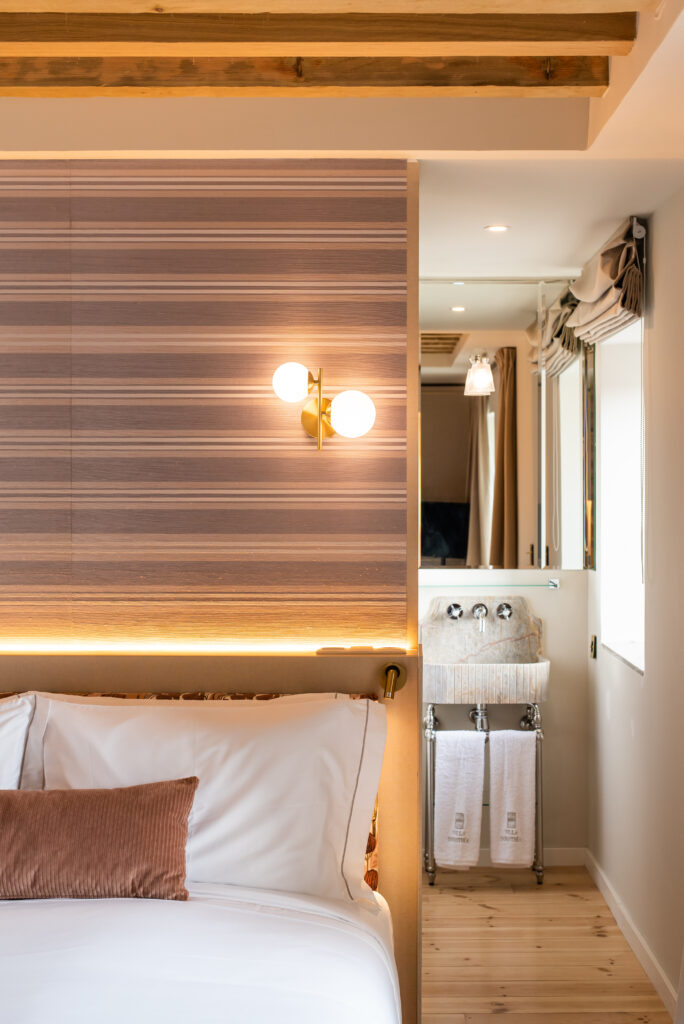
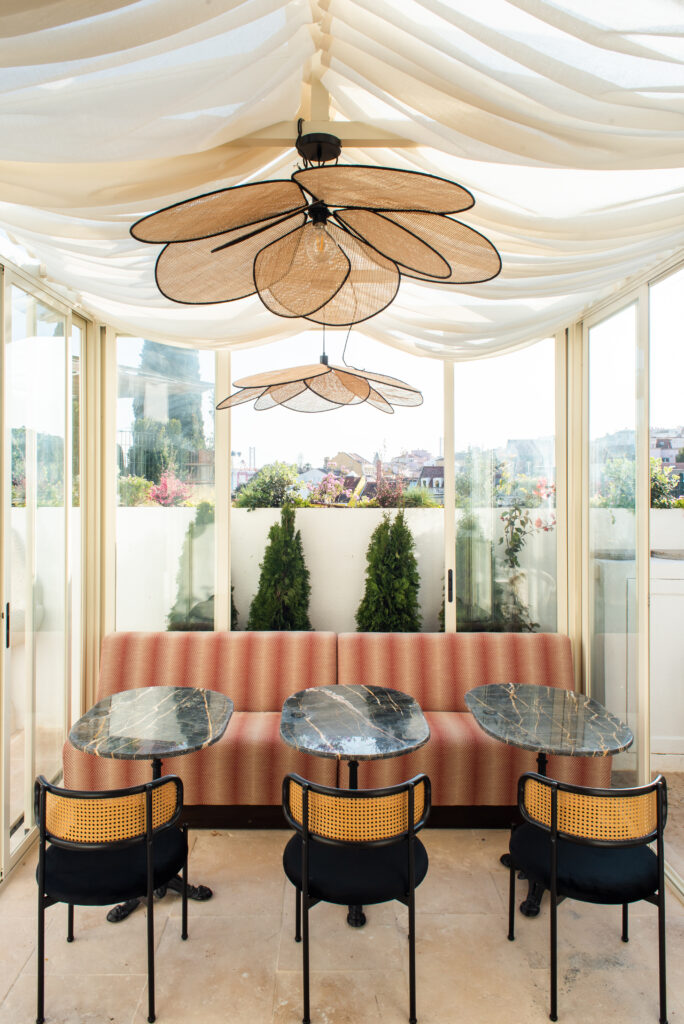
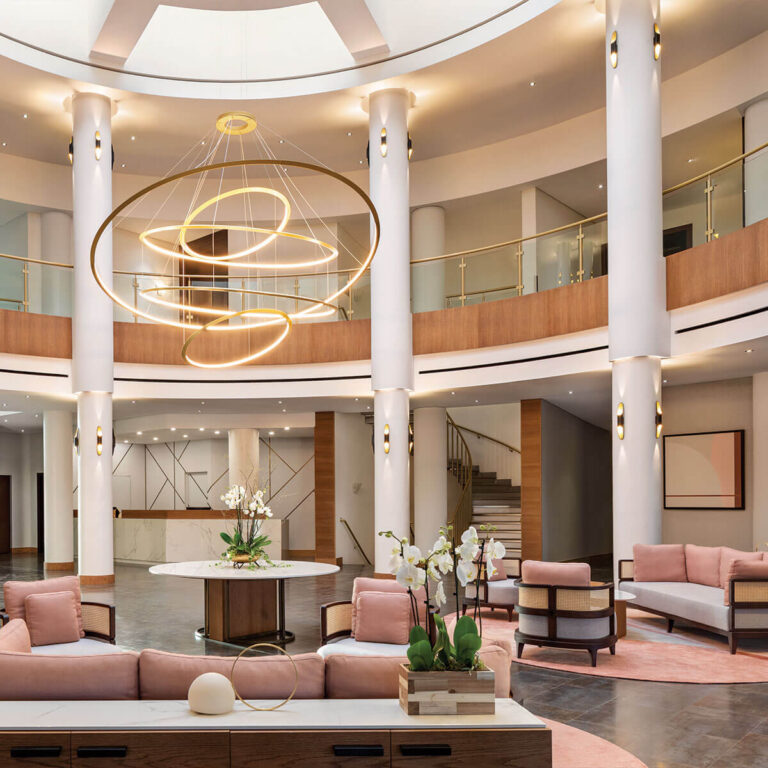
The interiors are the work of LACASTA Interior Design Studio, with styling by Carla Kottmann, and the register they have chosen is one the trade calls refined informality and the rest of us would simply call good taste in a soft voice.
The palette is tactile: warm stone, linen, velvet, wood, marble, all of it pitched low and shaped, as the studio puts it, by shadow and texture rather than by colour. The real collaborator is Lisbon’s golden evening light, which the courtyards and rooftops hand around the property until the whole place tips from calm morning to candlelit night.
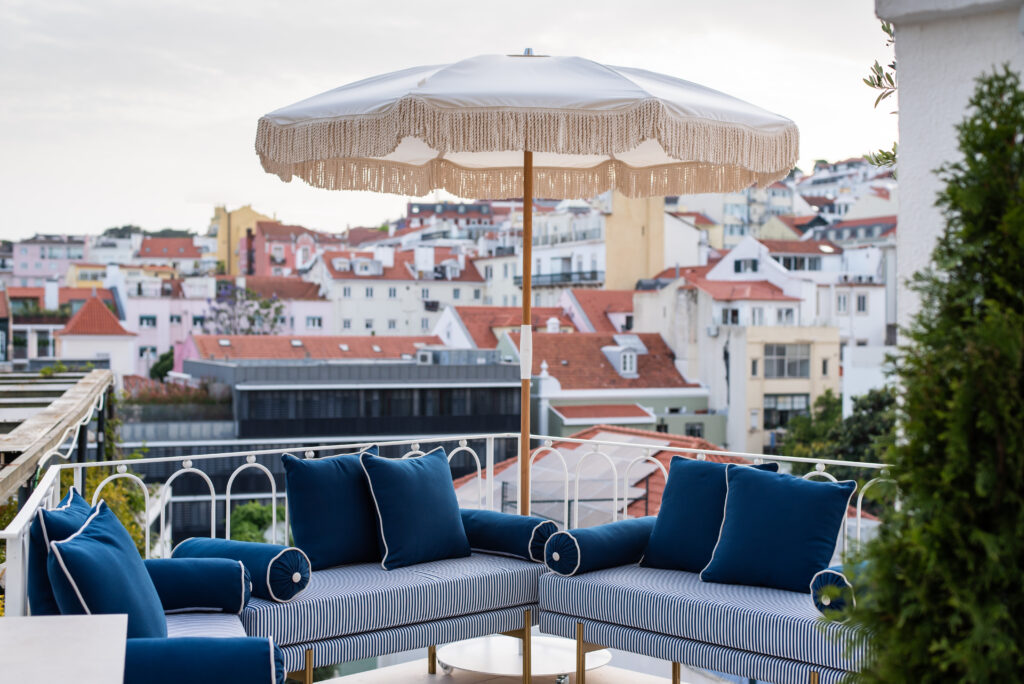
The restaurant is named, with some accuracy, The Secret. It seats twenty five across a hidden patio and a rooftop terrace, which in this part of Lisbon is a rare piece of geography, and it opens to residents and outsiders alike: a set menu at lunch, then cocktails and dinner from five until eleven. As night settles over Lapa the room turns over from quiet courtyard to something closer to a party, filled with local regulars and Lisbon creatives who have found it by word of mouth.
The kitchen belongs to executive chef Margarida Dias, who grew up in Serpa in the Alentejo and arrives by way of JNcQUOI, LOCO, Bicho Mau, and MasterChef Portugal. Her cooking crosses Portuguese produce with brasserie technique and a southerner’s seriousness about seasonality. Oysters come with coconut, lime, and seaweed. Violet prawn is served as carpaccio. There is Portuguese Wagyu, and cheese and charcuterie from regional producers treated as a course rather than an apology.
Villa Dorothéa’s wellness offer is deliberately unbuilt. There is no spa, no subterranean thermal suite, no white robed corridor. Instead a yoga mat waits in every room, classes run at LX Portal directly across the street, and Swedish massage is delivered in the room on request. The pillow menu runs to three options, including an aromatherapy memory foam pillow infused with CBD, lavender, and chamomile, which is either the most Lisbon detail in the building or the most 2026 one.
The programming follows the same instinct for the domestic: champagne rituals, wine tastings with small producers, and Sunday Suppers, gathering guests and neighbours around long communal tables in the manner of a Portuguese family lunch. Guests are pushed outward too, toward the bookshops, cafés, bakeries, and artisans folded into the streets of Lapa and Santos. A hotel confident enough to send you elsewhere is usually a hotel worth returning to.
“We never wanted to create another luxury hotel designed around protocols and performance,” says Jacob Perez Toledano, founder of Tradition Signature. “Villa Dorothéa was imagined as a living house, a place of encounters, conversation, long breakfasts, evening gatherings and emotional connection. A place that feels inhabited rather than staged.”
That is a claim almost every small hotel now makes, and almost none earn, because inhabitation is a function of plan and time rather than of styling. Villa Dorothéa earns it on a technicality that turns out to be the whole design: it did not have to invent a village, because it inherited one, and had the discipline to leave the alleys where they were. Toledano’s label, which already runs Porta de Gaia in Porto and is assembling a portfolio across Southern Europe and Morocco, describes the method as restoring buildings without freezing them in time. On the evidence of Lapa, that is not a slogan.